
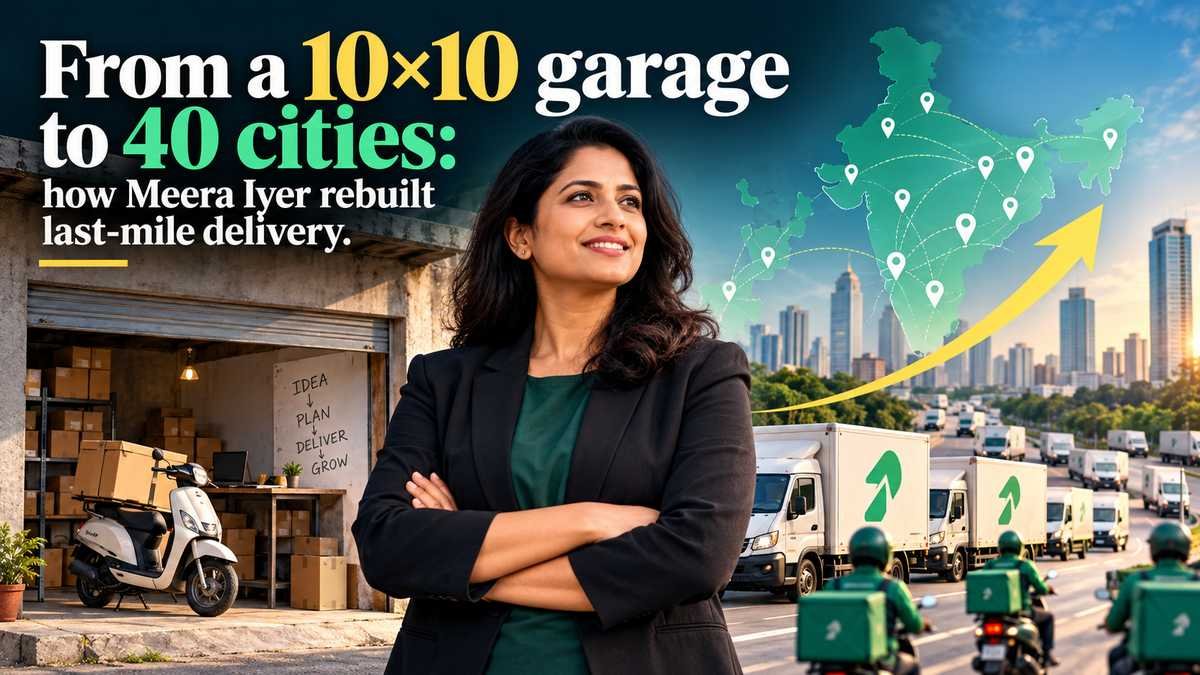
In 2016, Meera Iyer rented a garage barely large enough for six second-hand scooters and a folding table. She had left a stable job at a logistics multinational with one idea: small-town businesses deserved the same delivery speed that metro customers took for granted.
Eleven investors said no. Most told her the unit economics of tier-3 delivery could never work. So she stopped pitching and started delivering — for a sweet shop, two pharmacies and a textile wholesaler within walking distance of the garage.
Profitable by necessity
Without outside money, every route had to pay for itself. Meera built a pooling system that let one rider serve several merchants on the same loop, and priced by the stop rather than by the kilometre. By the end of the first year the business was profitable, if tiny.
Nobody would fund us, so we had to be profitable from the first month. That constraint became our biggest strength.
The model scaled quietly through word of mouth among traders. Today SwiftLane runs in forty cities, employs more than 3,000 riders — a third of them women — and handles over two lakh parcels a day.
What she tells young founders
Her advice is unfashionable: find a customer before you find an investor. “Revenue is the most honest feedback you will ever get,” she says. “Funding can come later, on your terms.”